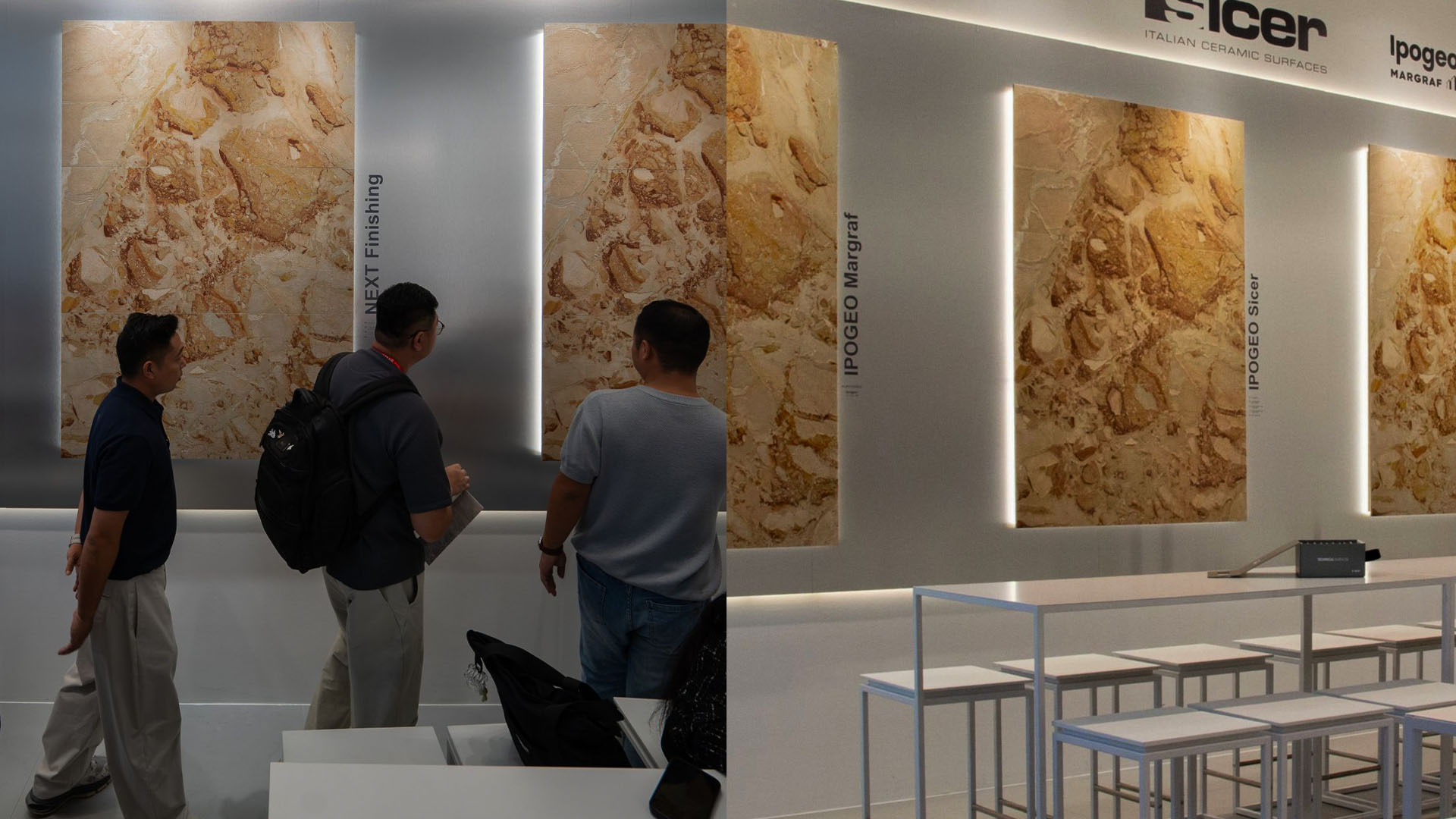

When observing a ceramic surface, attention is naturally drawn to the final result: the brilliance of the glaze, the depth of colour, the elegance of a matt finish or the long-term durability of the surface. Behind these characteristics, however, lies a complex process of material engineering that often goes unnoticed, yet plays a decisive role in the overall quality of the finished product.
Among the key elements of this process are ceramic frits, which influence glaze behaviour, surface aesthetics and the stability of the entire production cycle.
For this reason, selecting the right ceramic frit is not simply a technical decision; it is the starting point for developing reliable, high-performance ceramic surfaces capable of meeting the aesthetic and functional objectives of every project.
INDICE
- What is a ceramic frit and what is its function?
- How frit composition influences glaze behaviour
- Why ceramic frits influence the quality of the finished product
- From formulation to surface: the value of technical expertise
- The role of a ceramic frit manufacturer in industrial competitiveness
- How to choose a ceramic frit supplier
- Ceramic frits and innovation: driving the development of next-generation surfaces
- FAQ
What is a ceramic frit and what is its function?

A ceramic frit is a glassy material produced by melting carefully selected raw materials under controlled conditions, followed by rapid cooling and grinding. Within the ceramic manufacturing process, frits are a fundamental component in the formulation of glazes, ceramic grits and other materials used to create ceramic surface finishes.
Their function goes far beyond that of a simple ingredient. Ceramic frits determine how the glaze behaves during the firing cycle, influencing properties such as melting behaviour, adhesion, gloss, opacity and the overall development of the finished surface.
Each formulation is designed to meet specific application requirements. There is therefore no “universal” frit, but rather formulations developed according to the ceramic body, production process, desired aesthetic effect and required technical performance.
Understanding the role of ceramic frits means understanding one of the key factors that determines the quality, consistency and reliability of ceramic surfaces.
How frit composition influences glaze behaviour
The performance of a ceramic glaze depends not only on the individual raw materials it contains, but also on the balance established between all the components within the formulation. Within this system, the ceramic frit plays a decisive role by governing the behaviour of the glaze throughout the firing process.
Ceramic frits are incorporated into the formulation of glazes, engobes and, in specific applications, together with raw materials such as clays, kaolins and feldspars. Their primary function is to provide stability to the system and create the conditions required for the glaze to develop the desired characteristics during firing.
The composition of the frit has a direct impact on the final result. The selection of high-melting or low-melting frits, together with the balance between the modifying oxides within the formulation, influences how the glaze melts, flows and matures, ultimately determining the aesthetic and functional characteristics of the finished ceramic surface.
Ceramic frits also represent the starting point for the production of ceramic grits, confirming their central role in the development of a wide range of decorative solutions. For this reason, designing a new frit requires extensive formulation research, where every component is carefully selected according to the performance expected from the finished product.
Before being incorporated into ceramic formulations, frits are produced through an industrial process in which carefully selected raw materials are melted inside dedicated fusion furnaces at high temperatures. The molten material is then rapidly cooled to obtain the glassy phase, which forms the basis for all subsequent processing steps.
Why ceramic frits influence the quality of the finished product

The quality of a ceramic surface depends on the balance between several factors, including raw materials, formulation, firing parameters and process control. Within this system, ceramic frits are among the elements that contribute most significantly to product stability and performance.
A properly developed formulation can support consistent quality across different production batches, improve glaze behaviour during firing and help achieve uniform, reliable surfaces.
Aesthetic properties such as gloss, transparency, opacity and covering power also depend on the interaction between the frit and the other materials included in the formulation. At the same time, functional properties such as chemical and mechanical resistance are strongly influenced by frit composition and by its compatibility with the overall ceramic system.
Ceramic frits should therefore not be regarded simply as production inputs. They are genuine design tools capable of influencing both the visual appearance and the industrial behaviour of the finished ceramic surface.
From formulation to surface: the value of technical expertise
Every new formulation is the result of research, application testing and continuous dialogue with the production requirements of ceramic manufacturers.
Developing a frit requires in-depth knowledge of raw materials, firing cycles, application technologies and the behaviour of different ceramic systems. The objective is not merely to create a material that complies with technical specifications, but to develop a solution that can be effectively integrated into the production process.
For this reason, companies such as Sicer combine manufacturing expertise with extensive research and development activities carried out within the Technology Lab, supporting ceramic manufacturers in defining the formulations best suited to each application context.
Laboratory tests, industrial validation and technical assistance help optimise surface performance, reduce production-related issues and identify solutions aligned with the aesthetic and functional objectives of the project.
Formulation expertise therefore becomes a genuine added value, transforming a raw material into a development tool for the entire ceramic production process.
The role of a ceramic frit manufacturer in industrial competitiveness

The quality of a frit does not depend exclusively on its formulation. It also depends on the ability to manufacture it consistently, control its characteristics and adapt it to specific application requirements.
Choosing a ceramic frit manufacturer therefore means assessing much more than the availability of a product range. It means relying on a technical partner capable of understanding production requirements, interpreting project objectives and developing solutions that meet the required performance standards.
Batch-to-batch consistency, raw material control, formulation repeatability and technical support are essential to ensure production stability and reduce variability during manufacturing.
In this context, the expertise of the manufacturer becomes a strategic factor that contributes directly to the competitiveness of the ceramic company.
How to choose a ceramic frit supplier
Every ceramic project has its own specific characteristics. Ceramic bodies, firing temperatures, production lines, aesthetic objectives and performance requirements may all vary.
For this reason, the choice of a ceramic frit supplier should not be based solely on the properties of the material, but also on the ability to provide qualified technical support throughout the entire development process.
A reliable partner offers formulation expertise, laboratory activities, application trials and technical assistance to identify the solution best suited to the customer’s production requirements.
The goal is not simply to supply a frit, but to contribute to the development of ceramic surfaces that combine aesthetic quality, process stability and industrial efficiency.
This collaboration between ceramic manufacturer and technology partner makes it possible to address design and production challenges with greater confidence in a constantly evolving market.
Ceramic frits and innovation: driving the development of next-generation surfaces
The evolution of ceramic design requires increasingly advanced materials capable of responding to changing aesthetic and production requirements.
Textured surfaces, matt finishes, transparent effects, high-gloss coatings and new interpretations of natural materials all require carefully designed formulations that ensure the right balance between aesthetic performance and industrial behaviour.
At the same time, attention is increasingly focused on more efficient and sustainable manufacturing processes, with the aim of optimising resources and reducing environmental impact.
Within this scenario, research into ceramic frits continues to be a key driver of innovation. The development of new formulations supports the evolution of ceramic surfaces and helps manufacturers create increasingly high-performance solutions aligned with the expectations of the international market.
Are you looking for a partner for the development of high-performance ceramic frits?
From formulation research to application support, Sicer works alongside ceramic manufacturers to develop solutions designed to improve quality, production stability and surface performance.
Contact Sicer team to explore the available technologies and identify the solution best suited to your production process.
FAQ
A ceramic frit is a glassy material obtained through the controlled melting of selected raw materials. It is used in the formulation of glazes and ceramic grits to contribute to the aesthetic and functional performance of ceramic surfaces.
Ceramic frits influence glaze behaviour during firing, surface quality, gloss, opacity, resistance and overall production stability.
A frit is one of the main components used in a glaze formulation. The glaze is the coating applied to the ceramic surface, while the frit contributes to determining its behaviour and performance after firing.
In addition to product quality, it is important to assess technical expertise, research and development capabilities, formulation customisation, application support and consistency of supply.
A ceramic frit supplier with in-depth knowledge of industrial ceramic processes can support manufacturers in selecting the most suitable formulation, helping improve production efficiency, surface quality and the reliability of the final result.