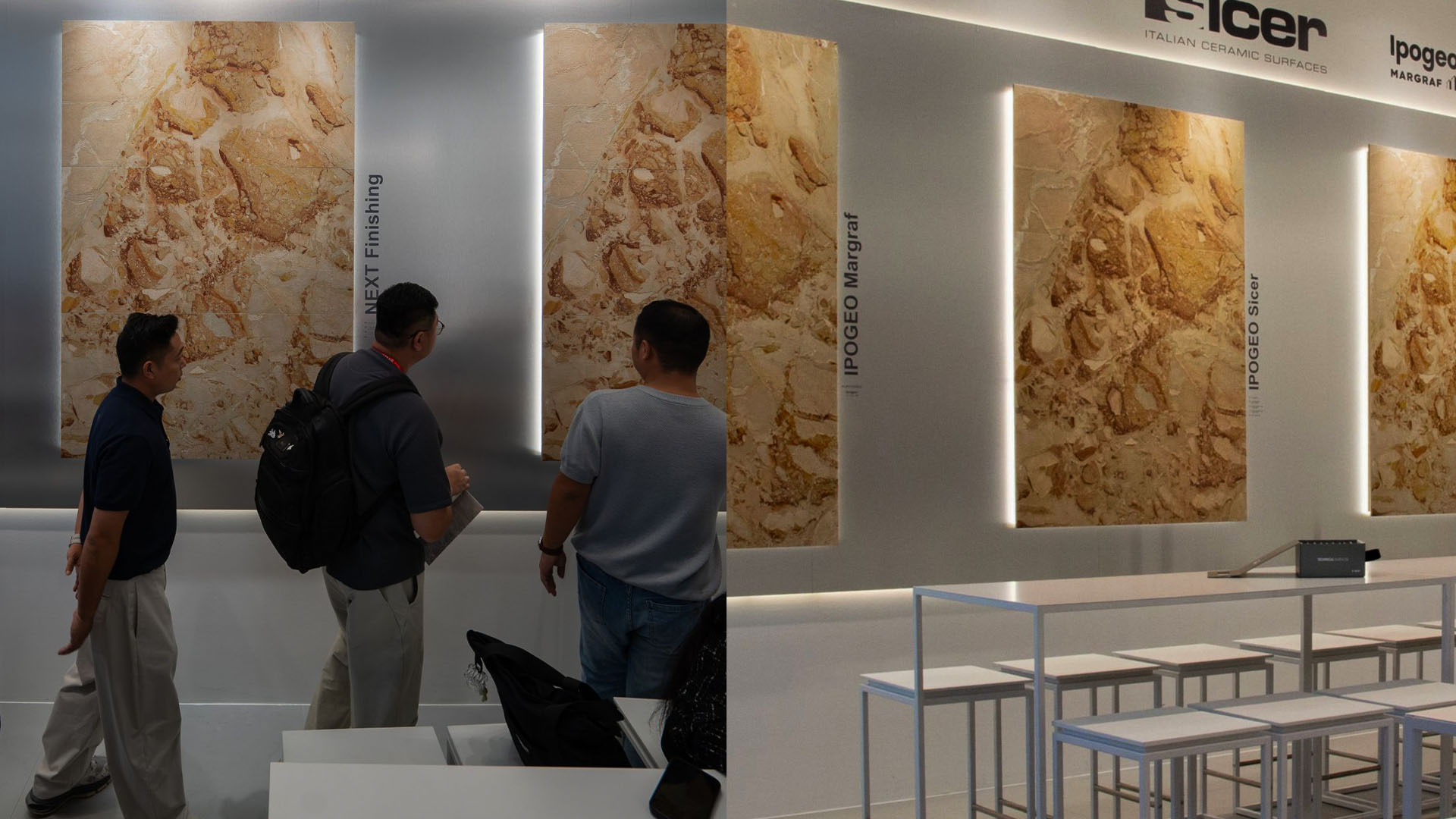

When choosing a supplier of ceramic glazes, ceramic grits, digital inks and other materials for ceramic surfaces, there is more to consider than the product range. Surface quality depends on how the formulation, application technology and production conditions work together.
Technical expertise, research capabilities, laboratory equipment and ongoing support are all essential when deciding who to work with.
What should manufacturers look for in a supplier, and how can a materials research and testing laboratory support them after delivery?
TABLE OF CONTENTS
- The supplier’s role in modern ceramic manufacturing
- Technical expertise and knowledge of production processes
- Formulation quality and consistent performance
- Laboratory capabilities: a key factor in choosing a supplier
- Analytical instruments for ceramic materials research
- Sample analysis: from research to after-sales support
- Tailored ceramic solutions: from development to production
- More than a supplier: a technical partner
- FAQ
The supplier’s role in modern ceramic manufacturing
As finishes and decoration technologies become more complex, ceramic manufacturers need suppliers with specialist skills and a thorough understanding of their industry.
Supplying glazes, grits, digital inks for ceramics and other decoration materials is only part of the job. A supplier also needs to understand the customer’s objectives and contribute to research into new solutions.
Choosing a supplier means assessing both the materials it offers and the technical expertise available to support them.
Technical expertise and knowledge of production processes
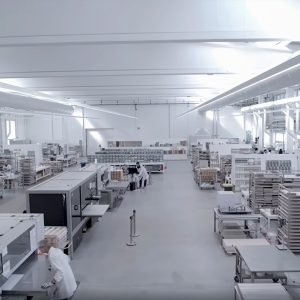
A supplier’s understanding of industrial processes is one of the first things to assess when sourcing materials for ceramic surfaces.
Formulation expertise needs to be backed by an understanding of how the material will be applied, dried and fired.
A supplier with proven technical expertise should be able to align product characteristics with the requirements of the manufacturer’s production line taking account of the application method, substrate properties and thermal cycle parameters.
This is especially important when developing a new finish or changing an existing process.
When assessing a supplier, check whether it can analyse your production conditions, recommend appropriate application trials and offer technical advice based on the results.
Direct contact between your technical team and the supplier’s is another consideration, particularly when addressing specific application requirements or investigating the causes of a problem.
Formulation quality and consistent performance
The quality of materials for ceramic surfaces cannot be judged on appearance alone.
Colour, gloss, opacity, texture and depth all matter. These qualities need to be supported by stable formulations that deliver consistent results over time.
A supplier’s reliability also depends on its ability to provide materials with controlled properties and repeatable performance under the intended production conditions.
This requires raw material checks, verification of product parameters and consistent material quality from one delivery to the next.
Variations can affect both appearance and technical performance, requiring adjustments during production.
Initial sample quality is only one part of the assessment. It is also important to understand how the supplier controls its materials and maintains consistent quality across production batches.
Technological laboratory: a key factor in choosing a supplier
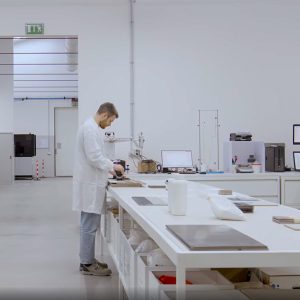
Access to an advanced materials research and testing laboratory is an important differentiator when evaluating a supplier of materials for ceramic surfaces.
Specialist equipment allows material properties to be examined in greater detail than surface observation alone, providing information for formulation research, development and evaluation.
Investment in laboratory equipment benefits more than the supplier’s own research. Customers can also draw on those analytical capabilities and resources for their projects.
This is a core part of Sicer’s approach. Its Technology Lab combines materials research, instrumental analysis and application expertise.
Analytical instruments for ceramic materials research
Sicer’s Technology Lab uses complementary analytical instruments to investigate material microstructure, composition and behaviour during processing.
The following instruments illustrate how these analyses support ceramic materials research.
Scanning electron microscope: a closer look at microstructure
A scanning electron microscope (SEM) reveals details at magnifications far beyond those possible with conventional optical instruments.
Studying a sample’s morphology and microstructure helps researchers understand its properties and investigate how the surface behaves.
At Sicer, these observations help the laboratory interpret material characteristics and investigate potential imperfections.
Optical dilatometer: understanding the response to heat
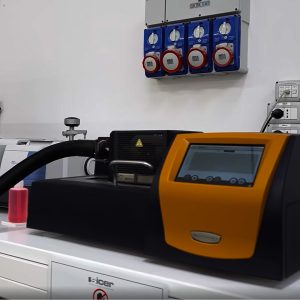
An optical dilatometer is used to study how materials behave as temperature changes.
The results help assess thermal expansion, sintering and compatibility between the ceramic substrate and the layers applied to it.
This information helps the team select materials and formulations to suit specific firing conditions.
Understanding how each component responds to heat also helps identify interactions that may affect the finished surface.
X-ray diffractometer: identifying mineralogical composition
An X-ray diffractometer (XRD) identifies the crystalline phases present in ceramic materials.
It can be used to analyse raw materials, substrates and layers of engobe, glaze or grit, before and after firing.
Knowing the mineralogical composition helps explain how materials behave and how the formulation and production process influence the finished product.
Digital optical microscope: examining surfaces and imperfections
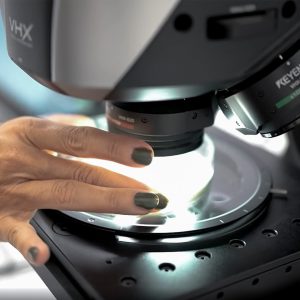
A digital optical microscope allows ceramic samples to be examined and their surfaces reconstructed in three dimensions.
It can characterise raw materials, glazes, engobes, inks and ceramic products, as well as reveal individual defects or discontinuities.
It can also be used to assess the size and position of gas bubbles within glassy layers.
Combining the findings from these instruments gives the team a more complete understanding of the materials and how they behave.
Sample analysis: from research to after-sales support
A laboratory’s role extends beyond research and new product development. Access to analytical expertise after delivery is another factor to consider when choosing a technical partner.
Once production is under way, you may need to investigate a surface’s behaviour, understand interactions between materials or have specific samples examined.
Sicer’s Technology Lab can support customers through advanced analysis and research on the samples they provide, using specialist equipment and technical expertise to investigate material properties in detail.
Sample analysis can help identify specific microstructural features, examine interactions between layers or provide information to help interpret a production issue.
The team interprets the findings in the context of the application conditions and industrial process, so the laboratory work addresses the manufacturer’s practical needs.
After-sales support is therefore an integral part of the working relationship, allowing technical discussions to continue while the materials are being used in production.
Tailored ceramic solutions: from development to industrial production
Every ceramic project has its own requirements: the desired appearance, the technical properties of the surface and the production conditions at the plant.
A supplier’s ability to tailor its solutions to those requirements is another important consideration.
A tailored solution involves more than changing a formulation. It means finding the right balance between materials, application technologies and the aims of the project.
This may involve laboratory trials, checks on application performance and further adjustments to suit production conditions.
The transition from laboratory development to industrial production is particularly important. Results obtained in the laboratory must be assessed against the parameters of the production line where they will be reproduced.
Sicer provides technical consulting through Bespoke Consulting, working with ceramic manufacturers to develop solutions tailored to their design and production requirements.
The laboratory and technical teams help assess the feasibility of each solution and support its use under the intended production conditions.
More than a supplier: a technical partner
Choosing a supplier of materials for ceramic surfaces involves more than assessing individual products. Specialist expertise and ongoing technical support are central to the value a supplier can offer.
Access to detailed analysis and ongoing technical assistance, including after delivery, provides important added value.
Through its Technology Lab and Bespoke Consulting service, Sicer works with ceramic manufacturers to develop and apply tailored solutions.
Are you looking for a technical partner to develop new ceramic surfaces or investigate how your materials behave?
Discover how Sicer’s laboratory expertise and technical consulting can support your project.
→ Explore Sicer’s Bespoke Consulting service
FAQ
Consider the supplier’s technical expertise, the quality and reliability of its formulations, its understanding of production processes, research facilities and application support. Its ability to develop tailored solutions and provide after-sales assistance is also important.
A research and testing laboratory allows a supplier to analyse material properties, study formulations and assess their behaviour at different stages of ceramic processing. Advanced equipment also helps investigate potential issues and gather data for development and industrial application.
Analysis can investigate microstructure, morphology, mineralogical composition and thermal behaviour. Depending on the research needs, electron and optical microscopes, dilatometers and X-ray diffractometers can be used to examine raw materials, glazes, engobes and ceramic samples.
After-sales support can include analysis of customer-supplied samples, studies of material behaviour and technical checks relating to application conditions. This allows customers to draw on specialist expertise and equipment during production.
A supplier provides materials and products. A technical partner also helps assess requirements, develop formulations, carry out application trials and evaluate results in industrial production. Research facilities and ongoing technical support make that broader working relationship possible.