With the publication of its 2025 Sustainability Report, Sicer continues its sustainability reporting process, launched in 2023, reaffirming its focus on responsible resource management, technological innovation and the development of its people.
For over 30 years, Sicer has been a leading technology partner for the ceramic industry, specializing in the development and production of materials for ceramic glazing and decoration. The pursuit of innovative solutions, the high technical and aesthetic performance of its products, and customer support are the distinctive strengths of a company that works alongside leading international manufacturers of large-format ceramic slabs.
In this context, the Sicer Sustainability Report 2025 highlights the Group’s initiatives and achievements in environmental, social and governance (ESG) areas, providing an overview of its corporate commitments and opportunities for future improvement.
TABLE OF CONTENTS
- The 2025 Sustainability Report: a commitment to continuous improvement
- Environmental sustainability: resource management and production efficiency
- Research and innovation: new solutions for the ceramic industry
- Certifications and sustainability assessments
- Social responsibility: people, training and safety
- Sustainable procurement and supply chain responsibility
- The future of sustainability at Sicer
- Conclusions
- FAQ
The 2025 Sustainability Report: a commitment to continuous improvement
The 2025 Sustainability Report, prepared in accordance with GRI Standards 2021, presents the Sicer Group’s main environmental, social and governance initiatives. The reporting covers the Group’s operating companies in Italy, Spain, the United States, Turkey, Indonesia, Mexico and India, providing an international overview of its activities.
Through data collection and analysis, Sicer monitors its performance and identifies the areas on which to focus future improvements.
The document therefore serves not only as a reporting tool, but also as a reference for progressively integrating sustainability objectives into corporate strategies.
Environmental sustainability: resource management and production efficiency
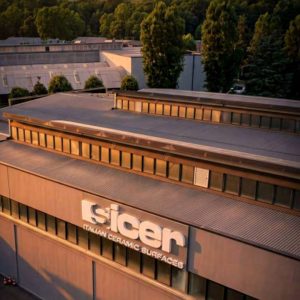
Responsible resource management is one of the key aspects of Sicer’s environmental commitment.
In 2025, the Group continued its initiatives focused on material recovery, water resource management and the use of energy from renewable sources.
Among the most significant results was the increase in the proportion of waste sent for recycling, which rose from 52% in 2024 to 71% in 2025 at Group level.
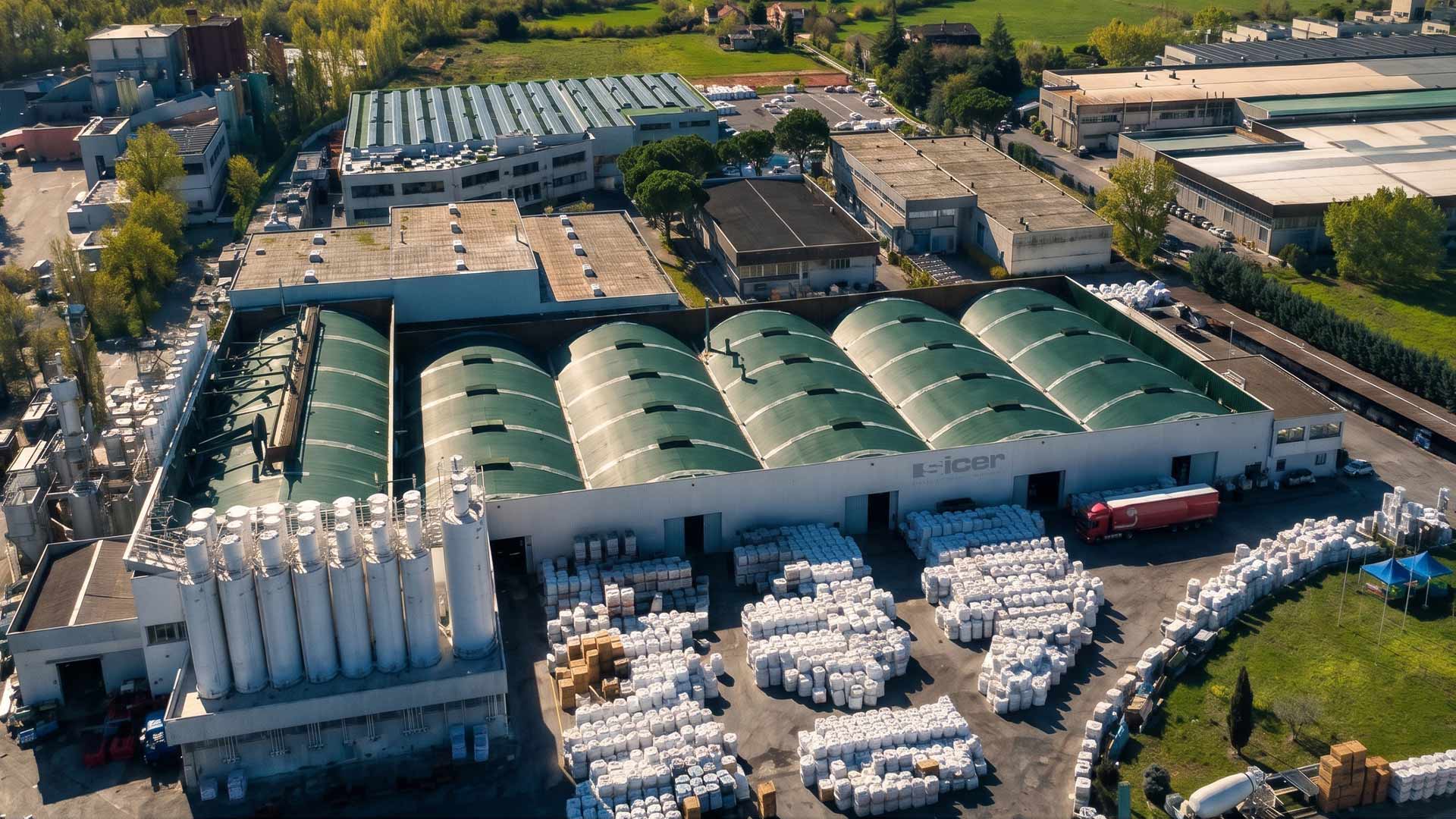
Particular attention is also paid to water management in production processes. At the Poggio Torriana plant, an internal treatment and recycling system enables the recovery and reuse of industrial water and water used for equipment cleaning.
In terms of energy, Sicer continues to operate its photovoltaic systems in Italy and Spain. Furthermore, since 2025, the electricity purchased by Sicer Italy has been covered by Guarantees of Origin from renewable sources.
The expansion of industrial activities has also led to an increase in the Group’s overall energy consumption, highlighting the importance of continuing to improve process efficiency and monitor emissions.
Research and innovation: new solutions for the ceramic industry
Research and development is one of Sicer’s defining strengths and contributes to the evolution of materials and technologies used in the ceramic industry.
Through its specialized laboratories, the company develops formulations, digital inks and decorative materials, aiming to combine technical performance, aesthetic quality and environmental considerations.
The 2025 Report documents the continuation of three research projects funded by the Italian Ministry of Enterprises and Made in Italy, addressing some of the industry’s main technological challenges.
These activities include the study of formulations designed to reduce firing temperatures, the optimization of production processes to limit energy consumption and waste, and the testing of advanced monitoring systems based on artificial intelligence.
Research also includes the development of highly durable ceramic decorations and research into potential applications of hydrogen in industrial processes.
These projects are still under development and reflect Sicer’s commitment to exploring new opportunities for technological innovation.
Alongside these initiatives, the company has already developed solutions such as low-emission digital inks from the .LE series and water-based digital glues, which provide concrete examples of the integration of materials research with attention to the characteristics of ceramic production processes.
Certifications and sustainability assessments

Sicer’s commitment to quality and environmental management is also reflected in the adoption of internationally recognized management systems.
Sicer Italy holds UNI EN ISO 9001:2015 certification for its Quality Management System and UNI EN ISO 14001:2015 certification for its Environmental Management System.
These certifications are important tools for process control, compliance with applicable requirements and the identification of opportunities for improvement.
In 2025, Sicer Italy also achieved an EcoVadis score of 65/100 as part of the assessment of its corporate sustainability practices.
EcoVadis evaluates corporate policies and actions relating to the environment, labor and human rights, ethics and sustainable procurement, providing an additional reference for monitoring ESG performance.
Social responsibility: people, training and safety
Sicer’s approach to sustainability also includes a focus on the people who contribute to the Group’s activities every day.
International growth is accompanied by a commitment to skills development, professional training, and the protection of health and safety in the workplace.
In 2025, the Group continued to invest in employee training, with activities dedicated to professional development and the management of risks associated with production processes.
Safety remains an area requiring constant monitoring and preventive measures, particularly in light of the increase in workplace accidents recorded compared with the previous year.
The aim is to progressively strengthen a corporate culture based on responsibility, risk awareness and professional development.
Sustainable procurement and supply chain responsibility

Sustainability also extends to supplier relationships and raw material procurement practices.
Through its sustainable procurement policy, Sicer S.p.A. integrates environmental, social and ethical criteria into the selection and evaluation of its business partners.
The assessment considers not only product quality and supply reliability, but also suppliers’ performance in relation to sustainability issues.
To support this approach, Sicer has adopted a supplier code of conduct, which establishes principles concerning respect for human rights, environmental protection, workplace safety and integrity in business relationships.
The company also carries out specific information-gathering activities for raw materials classified as Conflict Minerals, using dedicated reporting tools.
These initiatives contribute to the progressive integration of sustainability principles into relationships throughout the supply chain.
The future of sustainability at Sicer
The 2025 Sustainability Report represents another milestone in Sicer’s journey within a constantly evolving industrial landscape.
Among its upcoming initiatives, the Group plans to develop its first Sustainability Action Plan, with the aim of defining priorities, actions and monitoring tools in a more structured way.
This journey will continue to encompass materials innovation, resource management, people and supply chain responsibility, with particular attention to the needs of a ceramic industry increasingly focused on efficiency and technological development.
Conclusions
The publication of the 2025 Sustainability Report confirms Sicer’s intention to continue its journey towards transparent reporting and continuous improvement, integrating sustainability into its industrial activities.
Technological innovation, environmental responsibility and attention to people are complementary elements of this journey, in which the development of new solutions goes hand in hand with performance measurement and the definition of future objectives.
To explore the Group’s initiatives, results and performance indicators in greater detail, readers can consult the Sicer Sustainability Report 2025 in the dedicated section of the corporate website.
FAQ
The Sicer Sustainability Report 2025 is the document through which the Group reports on its environmental, social and governance (ESG) initiatives and performance. It continues the reporting journey begun in 2023 and presents the main results achieved, together with priorities for future improvement.
Sicer is committed to responsible resource management, waste recovery and recycling, the reuse of industrial water and the use of energy from renewable sources. The Group also develops research projects focused on production process efficiency and materials innovation for the ceramic industry.
Through its research and development laboratories, Sicer studies new formulations and technologies for ceramic decoration, focusing on material performance and industrial process efficiency. Its research activities include projects aimed at reducing firing temperatures, optimizing production processes and applying artificial intelligence to process monitoring.
Sicer Italy holds UNI EN ISO 9001:2015 certification for quality management and UNI EN ISO 14001:2015 certification for environmental management. In 2025, it also achieved an EcoVadis score of 65/100 for its corporate sustainability practices.
The document is available in the Sustainability section of Sicer’s official website, where readers can explore the Group’s environmental, social and governance initiatives, results and performance indicators in greater detail.